Table of Contents
Choosing the right flooring system is an important decision for any industrial facility. Warehouse floors, manufacturing plants, food processing units, and commercial buildings all face different challenges. Heavy equipment, chemical spills, moisture, temperature changes, and constant foot traffic can damage ordinary concrete over time.
Two popular options for demanding environments are epoxy flooring and urethane cement flooring. Both offer protection for concrete surfaces, but they perform differently under certain conditions. Understanding these differences can help facility managers choose a flooring system that meets their operational needs and budget.
Often a good fit for: dry warehouses with forklift traffic and ordinary cleaning requirements, distribution centers, storage areas, and general manufacturing spaces.
Often a good fit for: food processing plants and other areas exposed to hot water, temperature fluctuations, moisture, and frequent sanitation.
What Is Epoxy Flooring?
Epoxy flooring is a resin-based coating applied to properly prepared concrete. It combines epoxy resin with a hardener to create a durable surface that bonds to the substrate.
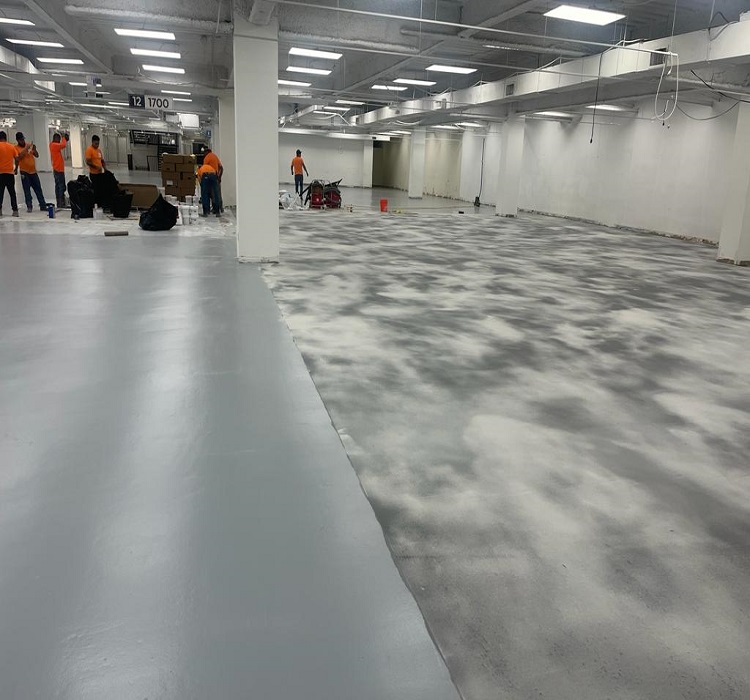
Industrial epoxy flooring is commonly used in warehouses, distribution centers, automotive facilities, manufacturing plants, and equipment rooms. It provides a smooth, easy-to-clean surface and can improve the appearance of worn concrete floors.
One of the main advantages of epoxy flooring is its versatility. It comes in different colors, thicknesses, and finishes. Businesses can also incorporate safety markings, designated walkways, and other visual features into the flooring design.
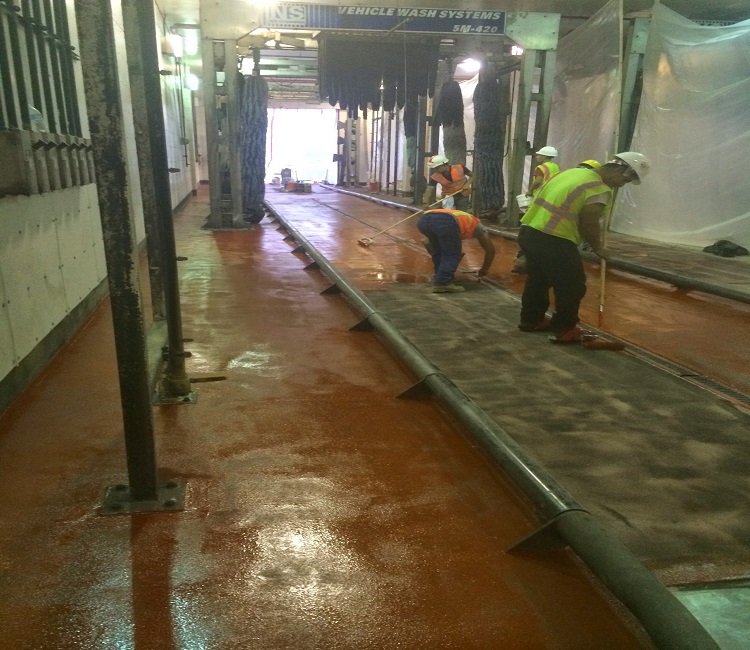
Epoxy systems can provide good resistance to abrasion, oils, and many chemicals. However, their performance depends on the specific product, installation method, and conditions inside the facility.
Standard epoxy coatings may not be suitable for areas exposed to frequent temperature changes, hot-water washdowns, or persistent moisture beneath the concrete. These conditions should be evaluated before selecting a system.
What Is Urethane Cement Flooring?
Urethane cement flooring, also called urethane concrete, is a flooring system made from polyurethane-based materials combined with cementitious components and other additives.
It is designed for demanding industrial environments where floors experience moisture, temperature fluctuations, chemical exposure, and heavy daily use. It is commonly found in:
- Food processing plants
- Commercial kitchens
- Beverage production facilities
- Pharmaceutical manufacturing areas
- Spaces that require frequent washing
Its major advantage is its ability to withstand thermal shock when the appropriate system is selected and installed correctly.
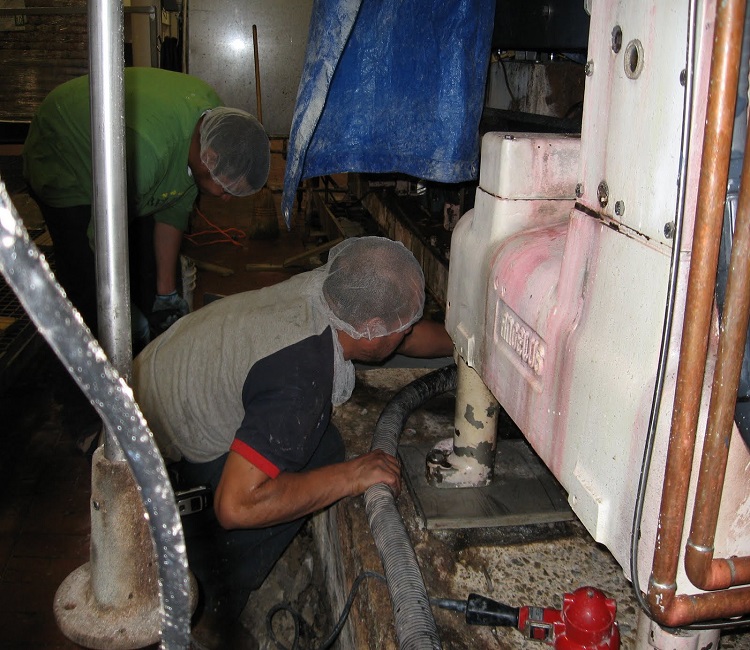
A food production facility may regularly wash floors with hot water after operations. A suitable urethane cement system can handle these conditions better than many standard epoxy coatings.
Urethane cement flooring can also offer strong resistance to moisture and certain chemicals. However, its suitability depends on the product formulation, floor preparation, and the specific substances present in the facility.
Epoxy vs. Urethane Cement Flooring: Key Differences
Although both systems protect concrete, they are designed for somewhat different working conditions.
Durability and Heavy Traffic
Industrial floors must withstand forklifts, pallet jacks, machinery, and repeated movement of materials.
Can provide excellent durability in warehouses and manufacturing facilities when the correct system is installed over properly prepared concrete. It is a practical choice for storage areas, distribution centers, and many general industrial applications.
Also built for demanding environments. It is particularly useful where heavy traffic occurs alongside moisture, thermal changes, or aggressive cleaning procedures.
Temperature Resistance
Temperature is one of the most important factors when comparing these flooring systems.
Can perform well under stable indoor conditions, but sudden temperature changes may cause problems with certain systems. Repeated exposure to hot water, steam, or thermal shock can contribute to damage if the coating is not designed for those conditions.
Generally better suited to environments with significant temperature fluctuations. This makes it a strong option for commercial kitchens, food processing facilities, and production areas where hot-water cleaning is routine.
Chemical Resistance
Both epoxy and urethane cement flooring can resist chemicals, but neither system is resistant to every substance. The correct choice depends on the chemicals used in the facility, their concentration, temperature, and duration of exposure.
Can work well in areas exposed to many oils, solvents, and industrial chemicals, depending on the formulation.
Can be suitable for environments exposed to certain acids, cleaning agents, fats, and food processing chemicals.
Moisture and Washdown Conditions
Moisture can cause serious problems for industrial flooring if the system is not selected correctly.
Requires proper surface preparation and moisture evaluation. Excess moisture or vapor transmission from the concrete can contribute to blistering, peeling, or adhesion failure.
Often preferred in wet processing environments because suitable formulations tolerate demanding washdown conditions.
Appearance and Maintenance
Available in a wide range of colors and finishes. Its smooth surface makes it easy to sweep, mop, and maintain. This makes it popular in warehouses, showrooms, and manufacturing facilities where appearance and cleanliness both matter.
Usually selected for performance rather than decorative appeal. It can still provide a neat, professional finish, with suitable textures and slip-resistant options for wet working environments.
Epoxy vs. Urethane Cement at a Glance
| Factor | Epoxy Flooring | Urethane Cement Flooring |
|---|---|---|
| Heavy traffic | Excellent durability when correctly specified and installed | Built for heavy traffic combined with moisture and thermal changes |
| Temperature changes | Best under stable indoor conditions | Generally better suited to significant temperature fluctuations |
| Chemicals | Many oils, solvents, and industrial chemicals (formulation-dependent) | Certain acids, cleaning agents, fats, and food processing chemicals |
| Moisture & washdowns | Needs moisture evaluation; excess moisture can cause adhesion failure | Often preferred in wet processing environments |
| Appearance | Wide range of colors and finishes | Performance-focused, neat professional finish |
| Initial cost | May be more economical in stable conditions | May involve a higher initial investment |
Which Flooring System Is More Affordable?
The cost of epoxy and urethane cement flooring depends on several factors, including floor area, concrete condition, surface preparation, coating thickness, material selection, and installation requirements.
May be more economical for facilities that need a durable surface under relatively stable indoor conditions. It can offer good value for warehouses, storage buildings, and general manufacturing spaces.
May involve a higher initial investment because of its specialized materials and installation requirements. However, in environments with frequent hot-water washdowns, moisture, and aggressive cleaning, choosing a more suitable system can help reduce premature floor failures and costly repairs.
Rather than comparing prices alone, businesses should consider expected maintenance, service life, downtime, and the consequences of flooring failure.
How to Choose the Right Flooring for Your Facility
Before selecting a flooring system, assess how the building operates each day.
For a dry warehouse with forklift traffic and ordinary cleaning requirements, industrial epoxy flooring may be a suitable option. For a food processing plant exposed to hot water, temperature fluctuations, and frequent sanitation, urethane cement flooring may be the better fit.
Consider these questions before making a decision:
- Does the floor experience frequent hot-water washdowns?
- Are chemicals, oils, or corrosive substances regularly spilled?
- Is the facility exposed to moisture or temperature fluctuations?
- How much forklift and machinery traffic does the floor receive?
- What level of slip resistance is needed?
- How long can the facility remain closed during installation?
A professional flooring contractor can assess the concrete, operating conditions, and maintenance requirements before recommending a system.
Choose the Right Industrial Flooring Solution
There is no single flooring system that works best for every industrial facility. Epoxy flooring offers durability, easy maintenance, and versatility for many warehouses and manufacturing environments. Urethane cement flooring is often better suited to demanding conditions involving moisture, thermal shock, and frequent washdowns.
Choosing the right system starts with understanding the challenges your floor faces every day.
MRK Industrial Solutions provides industrial flooring solutions for facilities that need durable, reliable surfaces. If you are planning a new flooring project or replacing a damaged concrete coating, contact us to explore your options and discuss the requirements of your facility.
A properly selected and installed flooring system can help protect your concrete, support daily operations, and keep maintenance manageable for years to come.